Choosing the best rechargeable bicycle air pump in 2026 requires more than comparing battery capacity or marketing claims. Global buyers need dependable inflation, accurate pressure control, and charging compatibility across different travel conditions. A pump may look impressive online, yet fail beside a wet roadside when a tire loses pressure.
Cycling technology reviewer Ray Maker offers a useful perspective: “A compact pump is only useful when its battery and pressure reading remain dependable outdoors.” This idea guides our comparison. We examine real-world details, including valve compatibility, maximum pressure, inflation speed, noise, weight, and heat during repeated use. These features matter when a road cyclist carries a 700c tire setup, or when a mountain biker repairs a tubeless tire far from a workshop.
Battery performance deserves careful attention. A small lithium battery may inflate one tire well, but struggle with two low-pressure tires. USB-C charging is convenient, although included cables and charging speeds can vary. Some displays are bright and readable. Others become difficult to see in sunlight.
No pump is perfect.
Our evaluation also considers practical weaknesses. A pressure reading can be slightly inaccurate. A metal connector can become hot. A claimed pressure limit may not reflect normal field performance. These limitations deserve honest discussion.
This guide to the 2026 best rechargeable bicycle air pump options helps riders compare products with clearer expectations. It focuses on measurable performance, everyday handling, and reliability across commuting, touring, gravel, road cycling, and mountain biking.
What a Rechargeable Bicycle Air Pump Is and How It Works
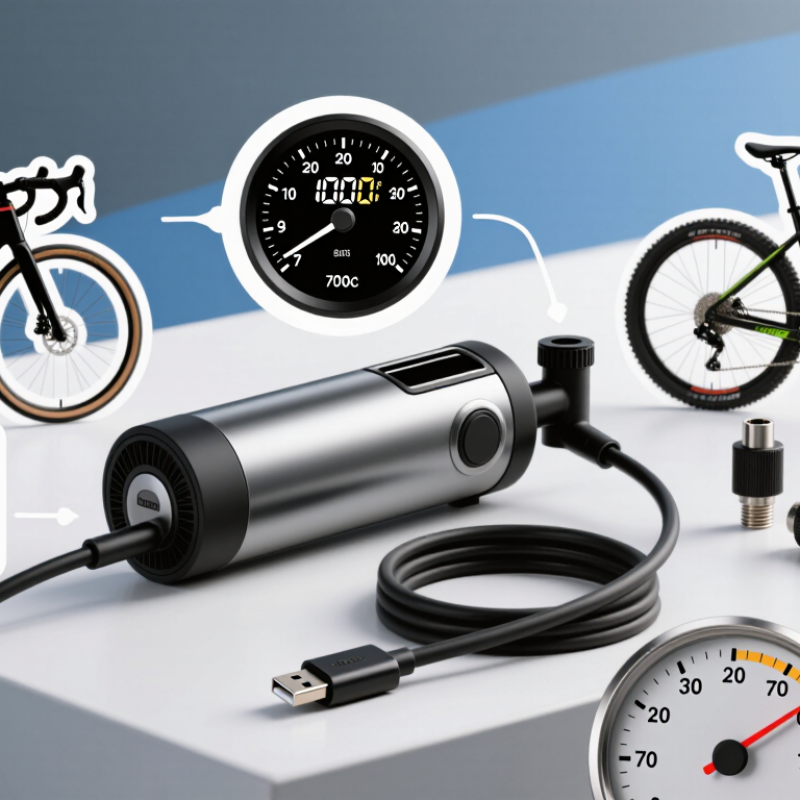
A rechargeable bicycle air pump is a compact electric compressor powered by an internal battery. It removes the need for a hand pump during roadside repairs or routine pressure checks. Most models include a digital gauge, a control panel, and adapters for common bicycle valves.
The working process is simple. After selecting the correct valve connection, the motor drives a small piston or diaphragm. This action compresses air and pushes it into the tire. The gauge measures pressure continuously, while an automatic stop can prevent obvious overinflation. Set the target pressure before starting.
In practical use, I check the valve connection twice. A loose seal can create noise without adding useful air. A road tire may fill quickly, while a wide commuter tire takes longer. The pump body can become warm after several minutes. Let it cool when necessary.
Battery capacity matters more than advertised speed. Cold weather, low tire pressure, and repeated inflation can reduce operating time. A USB charging port is convenient, but charging from a weak power source may take longer. Pressure readings are helpful, not perfect. I compare them with a trusted manual gauge when accuracy is important.
The best rechargeable bicycle air pump should balance size, pressure range, noise, battery life, and heat control. Very small designs are easy to carry, yet they may work slowly. That trade-off deserves attention.
Key Specifications Global Buyers Should Compare in 2026
When comparing rechargeable bicycle air pumps in 2026, start with pressure control, not appearance. A road bicycle may need 100 to 120 psi, while many city and gravel tires need less. Choose a pump with a verified maximum pressure above your normal target. A digital gauge should show small changes clearly, especially near the final pressure. I prefer controls that work with cold or slightly wet fingers.
Battery capacity also needs careful checking. Look for stated inflation counts, not only milliamp-hours. A useful test is several 700c tire fills before recharging. Temperature, tire size, and starting pressure can change the result. They often do. USB-C charging is practical for international travel, but buyers should check input voltage and cable compatibility. Charging indicators should be easy to read in dim garages.
Weight, noise, and heat affect real use. A compact pump under 500 grams is easier to carry, but smaller motors may work more slowly. Measure the operating noise if possible. A metal connector, flexible hose, and secure valve seal reduce air loss at the roadside. Automatic shutoff can prevent overinflation, yet its accuracy should be independently checked with a trusted gauge. Water resistance helps during sudden rain, but it does not mean full waterproofing. I would also examine warranty terms, spare seals, charging support, and regional service access. One overlooked detail remains grip comfort. Cold hands expose poor design quickly.
Battery, Charging, and Power Compatibility Across Regions
2026 Best Rechargeable Bicycle Air Pump for Global Buyers
Battery, Charging, and Power Compatibility Across Regions
For global buyers, a rechargeable bicycle air pump is useful only when its battery and charger match local power conditions. I check the input label before testing any unit. A rating such as 100–240 V, 50/60 Hz supports many household outlets, but it does not guarantee plug compatibility. The wall adapter needs the correct regional plug or a reliable travel adapter. Never force a loose connection.
USB charging adds flexibility. A pump with USB-C input can charge from a laptop, vehicle port, or power bank. However, charging speed depends on the required voltage and current. Some pumps accept basic 5 V charging, while others need higher-power USB-C delivery. I compare the printed input specifications, cable rating, and battery capacity, rather than trusting a product photo. Cold weather can reduce battery runtime noticeably. That matters on a winter roadside.
Regional buyers should inspect battery replacement policies and charging instructions. Built-in lithium batteries are convenient, but service options may vary across countries. I prefer clear manuals, overcharge protection, and visible charging indicators. Still, indicators can be vague. One test unit showed full power too early, so I measured charging time and completed a real tire inflation test. This exposed a weaker battery than the display suggested. Check the voltage range, connector, plug solution, and battery claims before purchase.
Choosing the Right Pump for Tires, Valves, and Riding Conditions
A rechargeable bicycle air pump should match your tires, valves, and riding environment. Road tires often require higher pressure, while mountain tires need controlled, lower inflation. Check the pump’s maximum pressure and its accuracy before buying. A clear digital display helps, especially during early morning repairs. Valve compatibility also matters. Presta valves are narrow and common on road bicycles. Schrader valves are wider and used on many hybrid and utility bicycles. A secure connector prevents air leaks and bent valve cores.
Tips:
Test the pump at home. Inflate one tire slowly. Check its reading against a trusted pressure gauge. Carry the correct adapter. Keep the battery above half charge before long rides. Do not rely on advertised speed alone.
Riding conditions change the best choice. Cold weather can reduce battery performance and increase inflation time. Dusty trails may clog exposed connectors. A compact pump fits easily in a frame bag, but its small battery may support only one full refill. Larger units work faster, yet they add weight. That compromise is real. I still prefer a pump with a readable screen, firm buttons, and automatic shutoff. However, automatic settings are not always perfect. Verify pressure manually when safety or long-distance comfort matters. Practice removing and attaching the hose before an emergency. Familiarity saves time when your hands are cold.
Safety, Maintenance, and International Buying Considerations
2026 Best Rechargeable Bicycle Air Pump for Global Buyers
A dependable rechargeable bicycle air pump should make roadside inflation safer, not more stressful. Check the tire’s sidewall pressure before connecting the hose. Never exceed that limit because heat can increase pressure during riding. Confirm whether the pump supports Presta, Schrader, or both valve types. A secure valve lock prevents sudden air loss. Keep fingers away from the hot metal nozzle. Some compact pumps become surprisingly warm after inflating two tires.
Battery care matters as much as pumping speed. Charge the unit on a dry, stable surface, and disconnect it after charging. Do not use a pump with a swollen battery, cracked casing, or damaged cable. Let it cool before storing it in a saddle bag. Clean dust from the valve connector and inspect its rubber seal monthly. Keep it dry. I once ignored a loose seal and wasted several minutes beside a wet road. That mistake changed my maintenance routine. Still, built-in pressure readings are not always perfectly accurate, so compare them occasionally with a trusted gauge.
International buyers should check charging input, plug compatibility, and included adapters. A USB charging cable may not include a wall charger. Confirm support for local pressure units, battery capacity, valve fittings, and language options in the manual. Check the seller’s warranty process before ordering across borders. Ask how replacement parts are supplied. Also, verify the carrier’s rules for rechargeable lithium batteries. Small details matter. A lower price can become expensive when shipping, returns, or missing accessories are unclear.
2026 Best Rechargeable Bicycle Air Pump for Global Buyers
Typical bicycle tire pressure ranges help buyers evaluate pressure capability, safety controls, maintenance needs, and international usability.
Safety, Maintenance, and International Buying Considerations
- Safety: Choose a pump with a pressure gauge, automatic shut-off, heat protection, and a hose or connector that locks securely onto the valve.
- Maintenance: Keep the valve adapter clean, avoid blocking cooling vents, recharge the battery according to the instruction manual, and store the pump in a dry place.
- International buying: Confirm compatibility with Presta and Schrader valves, check PSI and BAR display options, verify USB charging requirements, and review battery transport rules for international shipping.
- Pressure guidance: The ranges shown are common planning references. Always follow the pressure range printed on the tire sidewall or specified by the bicycle manufacturer.
FAQS
Match the pump with your tire pressure, valve type, and riding conditions. Road tires need higher pressure. Mountain tires need controlled, lower inflation. Check maximum pressure and reading accuracy before buying.
Presta valves are narrow and common on road bicycles. Schrader valves are wider and used on many utility bicycles. A dual-valve pump offers greater flexibility. Carry the correct adapter.
A clear screen helps during dark, early-morning repairs. It shows pressure without guessing. Still, automatic readings can be imperfect. Compare them with a trusted gauge sometimes.
Test it at home before carrying it outdoors. Inflate one tire slowly. Compare the display with a reliable pressure gauge. Practice attaching and removing the hose.
Check the tire sidewall pressure first. Never exceed its limit. Heat can increase pressure while riding. Keep fingers away from the hot nozzle. Some pumps become hot after two tires.
Cold weather can reduce battery performance and extend inflation time. Dusty trails may clog exposed connectors. Cold hands slow everything. Clean the valve area after dirty rides.
Charge it on a dry, stable surface. Disconnect it after charging. Do not use a swollen battery, cracked case, or damaged cable. Let the pump cool before storing it.
Confirm charging input, plug compatibility, pressure units, and included adapters. A cable may not include a wall charger. Check warranty support and replacement parts. Shipping details deserve careful attention.
A compact pump fits neatly inside a frame bag. However, its smaller battery may refill only one tire. Larger pumps work faster but add weight. That compromise is real.
Conclusion
A rechargeable bicycle air pump is a compact, battery-powered tool that uses an electric motor to compress air and inflate tires without manual effort. This guide explains how it works and highlights the specifications global buyers should compare in 2026, including maximum pressure, airflow, inflation speed, display accuracy, noise level, size, weight, and automatic shutoff performance. It also considers battery capacity, charging time, charging interfaces, voltage compatibility, and practical power options for different regions.
Choosing the right rechargeable bicycle air pump depends on tire size, pressure requirements, valve type, riding conditions, and how frequently the pump will be used. The article also covers safe inflation practices, heat control, battery care, storage, cleaning, and routine inspection. For international purchases, buyers should review shipping restrictions, plug or charging compatibility, warranty support, product documentation, and after-sales service to ensure the pump is reliable, convenient, and suitable for travel or everyday cycling.