China’s portable electric industry is moving from niche camping equipment into emergency backup, outdoor work, and household resilience. Grand View Research estimates that the global portable power station market reached approximately USD 545 million in 2023, with strong growth expected through 2030. The International Energy Agency also reports continuing investment in battery storage, although its data covers broader energy systems. The category is not perfectly defined. That matters when comparing suppliers.
China remains a major manufacturing base for lithium-ion cells, inverters, solar panels, and compact power systems. Companies such as EcoFlow, Bluetti, Jackery, Anker SOLIX, and Zendure compete through higher capacities, faster charging, quieter fans, and app-based monitoring. Battery expert Professor Shirley Meng has emphasized, “There is no silver bullet in battery technology.” Her point applies directly here. Buyers should examine the full system, not only the advertised watt-hours.
A reliable supplier should provide clear capacity testing, cycle-life data, thermal protection details, and traceable quality procedures. Independent certifications and regional compliance documents also deserve careful review. A 2,000-watt-hour unit may power a refrigerator, lights, and communications equipment, but runtime changes with temperature, load, and inverter efficiency. Real use is messier than a product page.
This guide evaluates China’s leading portable electric suppliers for global buyers. It considers manufacturing experience, product consistency, after-sales support, documentation, and customization capability. Some supplier claims still need deeper verification. That is a weakness worth acknowledging, not hiding. Practical purchasing decisions require samples, factory audits, and tested performance before large orders.
What Portable Electric Products China’s Top Suppliers Provide
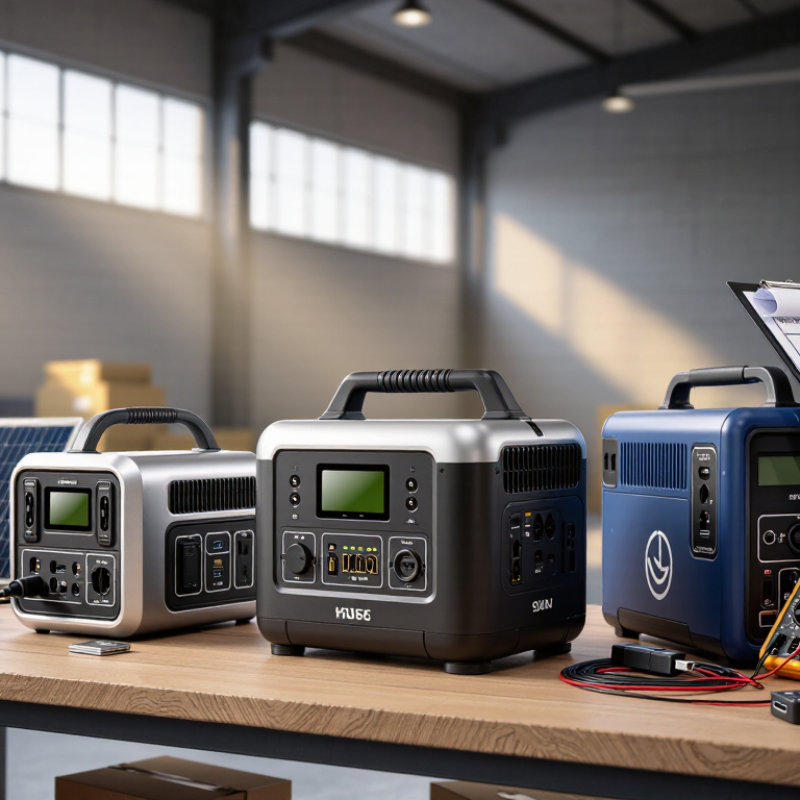
China’s top portable electric suppliers provide more than finished devices. Their product ranges often include portable power stations, battery packs, solar charging units, compact inverters, emergency lights, and mini UPS systems. Buyers can request different capacities, outlet types, charging speeds, and casing designs for local markets.
Experienced suppliers usually support OEM development and production testing. They may check battery consistency, temperature control, overload protection, and charging performance. Some provide test reports for standards such as UN38.3 or IEC 62133, where applicable. Buyers should verify every document independently. Paperwork can be incomplete.
A reliable supplier should explain cell sources, battery management systems, production controls, and warranty procedures clearly. Factory audits and sample testing can reveal more than polished presentations. Ask for performance data at realistic temperatures, not only laboratory conditions. A power station rated for outdoor use may lose efficiency in cold weather. That detail matters.
Suppliers also offer practical features, including LED displays, multiple USB ports, foldable handles, wheels, and solar input. Custom packaging and multilingual manuals help with international distribution. Yet customization can increase costs and lead times. Not every model fits. Buyers should compare usable capacity, recharge time, shipping limits, repair support, and regional electrical requirements before placing larger orders.
| Portable Electric Product Category | Typical Commercial Specifications | Battery or Power System | Common Ports and Functions | Commonly Requested Compliance | Typical Buyer Applications | Typical Export and Customization Options |
|---|---|---|---|---|---|---|
| Portable Power Stations | Approximately 300–2,000 W continuous output; 500–2,000 Wh capacity; selected models support higher surge output for motor-driven equipment. | Rechargeable lithium-ion or lithium iron phosphate cells; integrated battery-management system for overcharge, over-discharge, short-circuit, and temperature protection. | AC outlets, USB-A, USB-C, DC outputs, vehicle-style sockets, LED lights, and display screens; some models support solar or vehicle charging. | UN 38.3 transport testing; IEC 62133-2 battery safety testing; EMC and low-voltage requirements applicable to the destination market; dangerous-goods documentation where required. | Emergency backup, outdoor work, camping, mobile medical support, field maintenance, photography, and temporary power supply. | Capacity selection, outlet format, display language, enclosure color, user manual, carton artwork, and private-label packaging. |
| Portable Solar Generators | Commonly paired with 100–400 W portable solar panels; power-station capacity generally ranges from 300 Wh to 2,000 Wh. | Lithium-based rechargeable battery with solar charge controller; maximum solar input depends on the selected controller and battery model. | MPPT solar input, AC output, USB charging, DC output, vehicle charging input, and battery-status display. | UN 38.3 for lithium battery transport; IEC 62133-2 for applicable battery packs; electrical safety and EMC requirements for the destination region. | Off-grid travel, disaster preparedness, remote work, outdoor events, and low-power appliances. | Foldable panel configuration, cable length, connector type, charging profile, product color, carton configuration, and multilingual documentation. |
| Rechargeable Power Banks | Typically 5,000–30,000 mAh at nominal cell voltage; output commonly ranges from 10 W to 100 W depending on the model. | Lithium-polymer or lithium-ion cells with protection circuitry and battery-level indicators. | USB-A, USB-C input/output, fast-charging protocols, pass-through charging on selected models, and LED or digital indicators. | UN 38.3; IEC 62133-2; applicable EMC and radio requirements for models with wireless functions; destination-market labeling requirements. | Consumer electronics charging, travel, business gifts, outdoor activities, and emergency phone charging. | Capacity, casing material, color, surface finish, logo placement, retail box, cable inclusion, and multilingual labels. |
| Portable Battery Chargers | Usually designed for mobile devices and small electronics; common output ratings are 20–65 W with one or more charging ports. | Rechargeable internal lithium battery or compact high-density battery module; protection against over-current and overheating is commonly integrated. | USB-C, USB-A, charging indicator, foldable plug on selected designs, and simultaneous device charging on multi-port models. | UN 38.3 where a lithium battery is included; IEC 62133-2 for applicable cells or battery packs; electrical safety and EMC requirements. | Travel, office use, retail accessories, education, hospitality, and mobile-device support programs. | Plug type, charging power, port combination, housing color, printed branding, retail packaging, and regional instruction manuals. |
| Rechargeable LED Work Lights | Commonly 500–3,000 lumens; operating time often ranges from approximately 2–12 hours depending on brightness and battery size. | Rechargeable lithium-ion battery or sealed rechargeable battery pack; battery indicator and thermal protection are frequently included. | Floodlight or spotlight modes, USB charging, magnetic base, adjustable stand, hook, and emergency flashing mode on selected products. | Applicable electrical safety and EMC requirements; IP rating testing where water or dust resistance is claimed; UN 38.3 for lithium-battery shipment. | Construction, workshops, vehicle repair, camping, warehouse maintenance, and emergency response. | Brightness level, color temperature, battery capacity, mounting accessories, housing color, packaging, and multilingual safety instructions. |
| Rechargeable Fans | Typically 5–30 W input; compact desk, clip, and pedestal formats are common; operating time may range from approximately 3–20 hours. | Rechargeable lithium-ion battery or rechargeable sealed battery; speed control and low-voltage protection are normally included. | USB charging, multiple speed settings, oscillation on selected models, timer function, LED indicator, and adjustable tilt. | Applicable electrical safety and EMC requirements; UN 38.3 when shipped with lithium batteries; regional plug and labeling rules. | Homes, offices, warehouses, outdoor events, travel, and temporary cooling applications. | Blade size, battery capacity, fan speed, housing color, stand design, USB cable, carton artwork, and instruction language. |
| Portable Electric Heaters | Commonly 400–1,500 W for compact models; safety features may include thermostat control, tip-over protection, and overheat cut-off. | Usually powered directly from AC mains rather than an internal battery; portable battery-powered heating products are less common because of high energy demand. | AC plug, adjustable thermostat, heat settings, timer, fan-only mode on selected designs, and safety switch. | Destination-market electrical safety certification, EMC compliance, thermal and fire-safety testing, plug approval, and mandatory product labeling. | Personal heating, offices, temporary workspaces, workshops, and seasonal retail channels. | Rated voltage, plug type, heating element, thermostat design, housing color, packaging, warning labels, and user manual. |
| Portable Electric Coolers | Typical internal volume is approximately 10–50 L; many compact models operate from 12/24 V DC, while some also support AC input. | Thermoelectric cooling systems are common in compact units; compressor-based systems are used where stronger cooling and lower target temperatures are required. | Vehicle socket, AC adapter input, temperature control, digital display, USB output on selected models, and removable dividers. | Electrical safety and EMC requirements; refrigerant and energy-efficiency requirements may apply to compressor-based models; vehicle-use safety requirements may also apply. | Road travel, camping, food delivery, outdoor recreation, medical transport, and hospitality support. | Capacity, cooling range, voltage configuration, handle and wheel design, interior layout, color, packaging, and regional power adapters. |
| Portable Electric Air Pumps | Commonly 100–150 PSI maximum pressure for compact tire inflators; airflow, pressure accuracy, and inflation time vary by motor size. | Rechargeable lithium-ion battery or 12 V vehicle-powered design; automatic shut-off and pressure memory are common features. | Digital pressure display, preset pressure modes, LED light, USB output on selected models, and adapters for sports equipment or inflatables. | UN 38.3 for lithium-battery models; applicable electrical safety and EMC requirements; battery and charger testing where supplied. | Vehicle emergency kits, bicycles, motorcycles, sports equipment, travel, and roadside assistance. | Battery capacity, pressure units, hose length, nozzle set, display language, carry case, packaging, and vehicle-accessory configuration. |
| Portable Electric Vehicle Jump Starters | Commonly rated for 12 V systems; advertised peak-current ratings vary by design and should be verified through standardized testing and load specifications. | High-current lithium battery pack with reverse-polarity, short-circuit, over-temperature, and over-current protection. | Heavy-duty jumper clamps, USB charging ports, 12 V output, LED flashlight, battery indicator, and emergency signaling modes. | UN 38.3; IEC 62133-2 for applicable battery packs; EMC and electrical safety requirements; transport packaging for lithium batteries. | Automotive emergency kits, workshops, fleet operators, roadside assistance, and outdoor vehicle use. | Battery capacity, clamp cable length, current rating, flashlight function, carry case, display, carton design, and multilingual safety materials. |
FAQS
Check factory experience, production capacity, testing records, and technical documentation. Ask about battery cells, charging cycles, protection systems, and operating limits. A low price proves little.
Different batches can reveal inconsistent quality. Test charging time, output stability, cable strength, and repeated-use performance. One sample is not enough.
Look for clear instructions, warning labels, product traceability, and correct regional plug information. Check whether battery markings match shipping documents. Small gaps matter.
Request recent inspection reports, battery test reports, cell traceability records, and shipment documents. Verify the laboratory’s accreditation and report scope. Marketing photographs cannot replace evidence.
Confirm lead times, minimum order quantities, replacement procedures, payment terms, and inspection responsibilities. Put every agreement in writing. Fast replies may hide weak follow-up.
No. A video tour can show equipment and workflow, but it cannot replace an independent factory audit. Conditions may change between visits.
Product classification matters because batteries, chargers, and power stations may require different tests. Rechargeable lithium batteries commonly need international transport testing. Regional rules may include electromagnetic, safety, chemical, waste, and battery requirements.
Request material declarations, recycling instructions, packaging data, and final sampling records. Inspect insulation, grounding, thermal protection, and labels during an audit. A certificate alone proves little.
Conclusion
China’s top portable electric suppliers offer a broad range of products designed for mobility, convenience, and reliable power, including portable power stations, rechargeable energy devices, compact lighting equipment, and related accessories. This overview explains how global buyers can assess suppliers by reviewing product quality, production capacity, customization services, technical expertise, communication efficiency, and after-sales support. It also highlights major manufacturing regions in China and the different capabilities suppliers may provide, from research and development to assembly, testing, and large-scale production.
For international purchasing, buyers should carefully examine export experience, safety certifications, quality management systems, testing reports, packaging standards, and destination-market compliance requirements. A structured comparison process can include requesting samples, verifying factory information, reviewing documentation, conducting quality inspections, and confirming delivery terms and warranty policies. By combining supplier research with transparent verification and practical product testing, global buyers can select dependable partners that provide safe, compliant, and competitive portable electric solutions for different markets and applications.

